“Following Christ beyond the classroom”

16th Sunday after Pentecost (Mark 8: 27-38)  09/16/2012

Listen to an audio recording <select here>

Earlier this week I received my monthly college alumni magazine. I always enjoy getting caught up on the latest news about my classmates and this month I was also reminded that this year will be the 25th reunion of my college graduation; a time to remember and celebrate a milestone of hard work, an accomplishment of four years of learning. I remember four years of college was followed by another year of specialized training and then I finally arrived at my first ship. As I walked aboard the submarine I was welcomed by one of the ship’s Chief Petty Officers; he said, “Welcome to the real Navy, Mr. Perkins.” The “real” Navy, what was that supposed to mean? I replied, “I have been in the Navy for more than five years, Chief.” Unimpressed, this experienced sailor told me to keep my eyes and ears open, listen to the Chief Petty Officers and I would eventually learn about being a Navy sailor. A few years later, as I was preparing to leave the Navy and join the business world, I thought business school would be a wise decision, a way to better understand the new world I was about to enter. Business classes were very helpful in my preparation to embark on my new career, but remembering the experienced sailor’s advice, I wondered if the information I learned in the classroom would be enough? In a recent news article written by a business leader and author, that same question is considered: can the classroom provide students everything they need to know about the world of business? The author presents the advantages of classroom instruction combined with practical training in the field and asks the reader to consider this thought: “Whatever led us to imagine that classroom teaching alone was a smart way to teach anything practical, like law or business?”[i] The article holds up the medical teaching hospital as the ideal and praises the model of teaching students “where their subject is taking place in front of their eyes.”[ii] An interesting question: “Whatever led us to imagine that classroom teaching alone was a smart way to teach anything practical, like law or business”…or being a follower of Jesus? Continue reading
“Sacred Traditions”

Pentecost 14 (Mark 7: 1-23)  09/02/2012

Listen to an audio recording <select here>

The author of the Gospel according to Mark tells us this morning, “the Pharisees, and all the Jews…observed the traditions of the elders;…and there were many traditions that they observed.” (Mark 7:3-4) As we gather on this traditional Labor Day weekend, we must admit that there are a fair number of traditions that we observe. Perhaps as we sit in the church this morning with visions of the summer BBQ or the beach or some other holiday tradition on our minds, we might look quite fondly on our traditions. Traditions ground us in many ways: they connect us to our past and they provide us with a framework of how to proceed into our future. Some traditions are rather obvious and widely practiced, while other traditions are quite obscure and practiced by a select group of people. Turkey on Thanksgiving, freshly cut trees at Christmas and cakes with festive candles on birthdays include some of the most popular traditions in the United States. Lesser known traditions, so I’ve heard, include pulling off the legs of the turkey before cooking it in the oven, serving minced pie at Christmas, or taking long family hikes every New Year’s Day, regardless of the weather. Some traditions are fun and festive while others are quite sacred. Sacred traditions are often passed along to successive generations and eventually become accepted as strict rituals of the religious community. Continue reading

“Walking with God”

Pentecost 13 (1 Kings 8:1-30)  08/26/2012

Listen to an audio recording <select here>

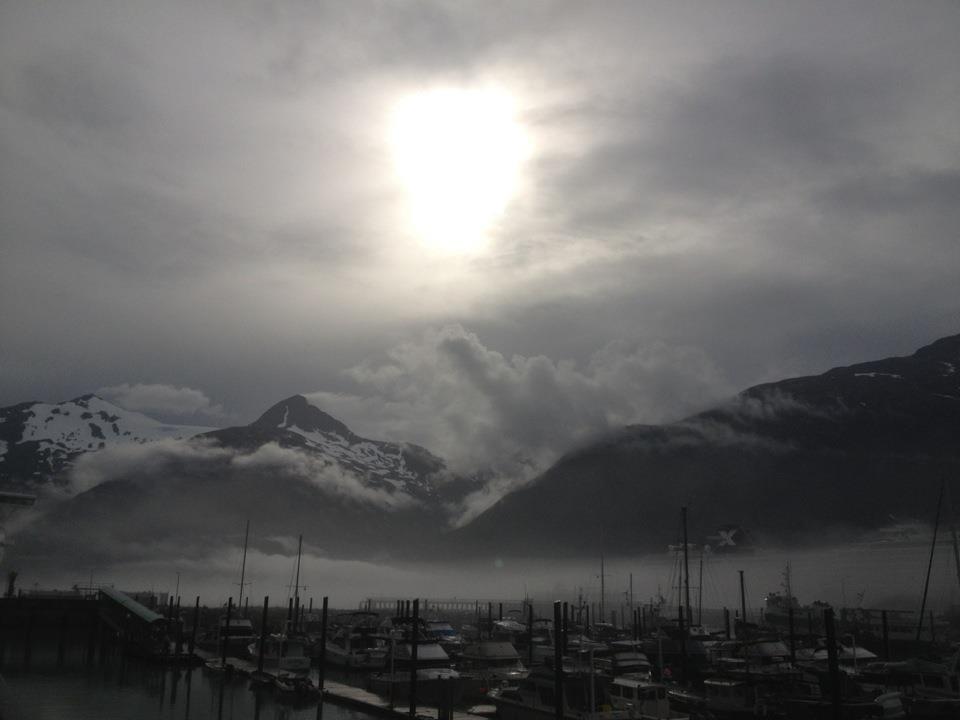
A few weeks ago while on vacation with my family I had the wonderful opportunity to go on a cruise to Alaska! The cruise was a trip to one of the last frontiers in the United States. Although tourists descend upon Alaska every year, much of the landscape has retained its rugged natural beauty: glaciers stretching toward the ocean; mountain peaks reaching toward the heavens; and clouds, fog and rain seemingly ever-present, covering the entire region in a soft white blanket. Once I had finally accepted the idea that “water” (in its various forms) was simply part of the trip, the clouds and fog seemed to enhance the beauty of the landscape rather than detract from it. Throughout the week, the fog never fully obstructed our view; but instead seemed to rest like a delicate white stole, draped over the majestic mountains, shrouding the sacred beauty of the area. As we stood on the deck of the ship and looked out and up, the landscape appeared mysteriously beautiful and incredibly large, so large, in fact, that keeping objects in perspective was often difficult. The 250 foot wall of the glacier face appeared to be half that high and mountains that appeared close enough to touch were in fact miles away (which meant a lot more rowing during the river boat excursion than first expected!). The might and majesty of nature seemed beyond containment and the vast beauty of the region had no end. Continue reading

“When is a patio not a patio?”

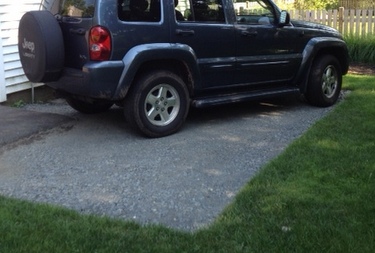
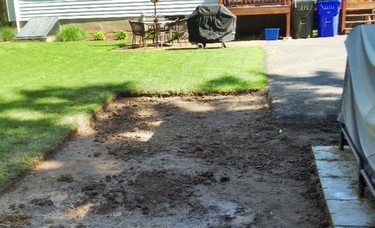
A trick question? “When is a patio not a patio?” And, no, the answer has nothing to do with the fact that the “patio” is not a patio because it is a bunch of processed gravel…this is true, but I’m working on the gravel pit and by the end of the summer the patio will be there…I promise. So back to the question at hand…and the answer (as seen below) is that a patio is not a patio when it is a parking lot. That’s right, my home project of building a “patio” will serve as a parking lot for the near future, but that doesn’t deter me from knowing that I am building a patio (and in my plans, there is a wonderful fire pit and space for a table & chairs and some nice reclining chairs too). Why does any of this matter or have any bearing on one’s daily life?

Last Sunday’s Epistle reading was from Paul’s letter to the Corinthians, with Paul encouraging the Christians in Corinth with the following: “As we work together with Christ, we urge you also not to accept the grace of God in vain. For he says, ‘At an acceptable time I have listened to you, and on a day of salvation I have helped you.’ See, now is the acceptable time; see, now is the day of salvation! We are putting no obstacle in anyone’s way, so that no fault may be found with our ministry…” (2 Cor 6:1-3) Paul’s intent is a defense of his ministry and his theology of life in Christ, but he also exhorts the Corinthians that life in Christ is a life lived wide-open; a life that is full of love and possibilities…and, importantly, that life begins now! And so, back to the patio, that is a parking lot, that is a patio – do not wait for life to align exactly as you believe it must look before jumping off and getting involved in all that life has to offer. The sooner you jump and join the fun, the better off you will be…and the better off everyone else around you will be because you have joined the party. Paul lists all the hardships he and his friends have endured (2 Cor 6:4-13) but ends this section of his letter by telling the Corinthians that the hardships have not prevented his participation in the “here and now” of life and in the acceptance of the grace of God given to him: “We have spoken frankly to you Corinthians; our heart is wide open to you. There is no restriction in our affections, but only in yours. In return – I speak as to children – open wide your hearts also.” (2 Cor 6:11-13) So, open wide your hearts and be open to the possibilities of life – even if the patio looks like a parking lot…

“Welcome to the family – adopted as children of God”

Trinity Sunday (Romans 8:12-17)  06/03/2012

Listen to an audio recording <select here>

A few years ago my family decided to venture west for our summer vacation, starting our week in Las Vegas and ending our trip in Phoenix. The highlight of the vacation was a tour of the Grand Canyon and the surrounding area; we were all really looking forward to the many beautiful and amazing natural wonders of this area. My sister and her family were excited to join us and in the heat of early July we all headed west to explore sites unseen. The desert landscapes and the rugged terrain of Arizona were most memorable for me and we spent many days touring the great outdoors as a close family unit. We peered across the Grand Canyon in many spots (and carefully looked down into the Canyon every once in awhile), but the greatest family fun was a one day journey down the Colorado River, starting in northern Arizona. Floating down the river with the canyon walls reaching high around us on either side was an incredible experience; an experience that helped me to understand why these canyons have been considered sacred space for so many generations of people. Everyone was having lots of fun as we floated down the river, but about halfway through the day one of the kids in the family became affected by the heat and needed immediate attention. Everyone worked together to provide all that was necessary for the young family member in need, coming together to provide care and comfort in ways that people do when they love and depend on each other. Families of people come in many shapes and sizes, and families experience times of joy and challenge, but the essence of being together as a family is the ongoing endeavor of relationship, the ongoing work of being together for each other. Continue reading

“Finding God in all things…including the pudding”

As someone who enjoys contemplative prayer, and especially prayer modeled after Ignatian spirituality, the works of William Barry, SJ, have been particularly important to me. Barry’s book, Finding God in All Things, is a wonderful and helpful spiritual guide…and the title is a great reminder that God is present beyond the walls of the church, where many of us like to keep God throughout our week. As spring turns to summer, finding God in the beauty of the flowers (forgiving them their pollen), open green fields, and the warmth of the sun can often seem rather obvious. However, the truth in discovering God in all things is to find God present in the red light on the way to work (reflection time?), the summer road construction delays (smoother journeys ahead?) and that pudding that you happened to have at lunch…pudding at lunch? As a fan of chocolate pudding, I often have a small cup of pudding at lunch and have recently taken to the idea of discovering the “picture of the day” on the underside of the foil covering. Recently I was greeted with an angel blowing a horn…OK, maybe you have to use your imagination to see the angel, but without too much effort I believe “Hark! the herald angels sing” will be ringing in your ears. And I hope shortly after the song fades from your mind, you will continue your ongoing discovery of finding God in all things. After all, tomorrow is the 25th…May 25th, but that’s close enough for now.

“In the midst of change You are there with me”

Seventh Sunday of Easter (John 17:6-19)  5/20/2012

Listen to an audio recording <select here>

As the days get longer and the sun shines a bit warmer, I become more aware that the time is nearly here for school to take its summer recess. The thoughts of lazy summer days and relaxing trips to the beach instill great joy in the hearts of many students; while for those students who will be graduating, the coming end of the school year begins a time of great transition. The transition of those leaving school marks the end of one chapter and the beginning of a new chapter in one’s life; a transition to a world only previously imagined but never fully experienced. In fact, on this very day 25 years ago, I tossed my hat high into the air with my classmates as we marked the end of our college days and nervously imagined what was to follow. Transitions are life events that are often full of personal emotions and excitement, but transitions are also events that remind us that we are not alone, we rely on those we love for guidance and support. J. Philip Newell, author and spiritual director, quotes a wonderful story by George MacLeod in his book, Listening for the heartbeat of God. George MacLeod was a Scottish clergyman and founder of the modern day Christian community of Iona. MacLeod tells a story of a great day of transition for his young daughter, her first day of school. He writes, “I was busy. I was writing letters. I was self-important. My little daughter was going to school that morning for the first time. She came into my room, in her first school uniform. I said, ‘Your tie is not quite straight.’ Then I looked at her eyes. She wasn’t crying. She was unutterably disappointed. She hadn’t come for tie inspection. She had come to show she was going to school for the first time. A terrific day, and I had let her down. What is that bit in the Gospel? Whosoever shall offend against one of these little ones…better for a millstone to be tied around his neck and that he be cast into the sea. I ran downstairs. I said all the right things. I crossed the road with her. I went to school with her. I had missed the moment, missed the point. I will always see these eyes. Sometimes when I am very busy. Sometimes when I am writing letters. I am forgiven, but I won’t forget.”[i] MacLeod’s reflection on his daughter’s great day of transition insightfully paints a vivid picture of both the emotional excitement and the fragile nature of transitions, and the human need for the love and support of others as we navigate through these unfamiliar times. Continue reading

“Traveling the Pilgrim road”

Fifth Sunday of Easter (Acts 8:26-40)  05/06/2012

Listen to an audio recording <select here>

From my earliest days of school I can remember learning about the Pilgrims of the Bay Colony and their struggles to live in a land that was new and foreign to them. Growing up in New England, the story of how these early settlers survived their first winter through the generosity and instruction of the native people they encountered created powerful images of two worlds coming together for the good. In thanksgiving for the bountiful harvest that was granted to them through the grace of God, these early Pilgrims took time out of their day and they ate turkey, they watched football and took a nap late in the afternoon…oh wait, that was last year! The first Thanksgiving was a bit different from the celebrations of today, but the Pilgrims of nearly four centuries ago did share something with pilgrims that set out on journeys today – pilgrims are in search for the grace and love of God as it is to be found in our world. Last Sunday at the forum we heard stories and saw many wonderful pictures of the mission trip to Cuba; and although the journey was a mission trip, the experience was also a pilgrimage to a special place where God’s grace is to be discovered among the people of Cuba…and this discovery cannot help but transform the traveling pilgrim. This morning in our Sunday forum we were introduced to the J2A pilgrimage to Belize. For the young men and women of the J2A class, their pilgrimage comes as a continuing element of their growth and development as young Christians. And this is the very idea of pilgrimage: a pilgrim sets out on a journey to discover things unknown, marvel at mysteries never experienced, and ultimately, to imagine how all these wonders point to the grace of God. The pilgrim sets out on a journey confident that the road traveled will provide a unique experience and foster the growth and development of one’s faith. Continue reading

“The Incarnate God among us”

The Third Sunday of Easter (Luke 24:36-48)  4/22/2012

Listen to an audio recording <select here>

Several months ago the Global Missions Committee began planning a trip to visit our companion church in Cuba. As the planning continued over the course of several weeks we learned more about the travel arrangements, the needs of the church in Santa Cruz del Norte, and we learned more about the Cuban people of our companion parish. Two weeks ago today, on Easter Sunday, we packed our cars full of eight bags of needed supplies and readied ourselves for an early Monday morning, arriving at the airport before sunrise. Our journey continued and with each moment we moved closer and closer to the community of Santa Cruz: we navigated through security lines, encountered long bag check lines, we lost our luggage, we found our luggage, and we finally arrived in Havana. We soon met Father Frank, members of the Cathedral staff, and when we arrived in Santa Cruz del Norte on Wednesday we met the eagerly waiting members of our companion church – all in the flesh. We can learn many important pieces of information via email and over the phone, but experiencing people up close and in the flesh is an experience that cannot be matched by any form of long distance communication. Throughout our week long visit to Cuba, our personal interactions with our Cuban friends profoundly shaped our experience and were the source of our lasting impression of their hospitality and grace. Continue reading

“Discover the mysteries of Easter”

Easter morning (Mark 16:1-8)  4/8/2012

Listen to an audio recording <select here>

A few days ago I sat in my house looking out a window and reflecting on the Gospel reading we just heard from Mark’s Gospel account. As I stared out the window I noticed a truck towing three large trees pass by and stop at the center median just a few hundred feet down the street. There was a police car close behind and as they began to spread orange cones around their work site I was reminded of a conversation I had years ago. Shortly after I moved to the Chicago area I asked a friend of mine if she found the landscape of the Midwest to be monotonous. I asked her this question because I found the flat terrain and prairie vegetation to be lacking as compared to the rolling hills and beautiful trees of the Northeast. She dismissed my preferences for the Northeast, telling me that she not only loved the Midwest’s landscapes but she was glad to not have to worry about all those trees hanging over her head. “Give me open spaces and big sky any day!” she told me. I laughed at her suggestion that the beautiful trees that imitated natural covered bridges and flowered arches would fall from the sky. At least, I found her suggestion to be laughable until last October. The late fall snowstorm that unleashed unimaginable destruction and lasted for days (that turned into weeks) made something that always seemed unlikely become incredibly real. Continue reading