Flooding our hearts with the saving grace of Christ

Second Sunday of Easter (John 20:19-31)  04/07/2013

Listen to an audio recording <select here>

Several years ago, as a member of the US Navy Reserve, I had the opportunity to participate in a multi-national naval exercise in the waters just south of Ireland. As we prepared for the exercise I learned that I was assigned to be an observer on a German U-boat, a submarine 150 ft. in length with a crew of about 20 people; an up-close and personal experience for sure. The participants of the exercise gathered on the coast of France to discuss the details of the coming week at sea, and after the meeting I met the Captain of the German submarine. He greeted me in perfect English and after a brief introduction he asked me where I had learned to speak German. I told him that, unfortunately, I did not speak German. He was quite surprised at my answer and said, “Do you realize that you will be at sea for more than a week in a German submarine…and you do not speak German?” I assured him that I did realize this was about to happen and that I really did not speak German…I could say “hello,” “goodbye” and “thank you.” “Why would the US Navy send an officer aboard a German submarine who cannot speak German?” he replied. “Because we’re Americans and sometimes we do crazy things,” I answered. He laughed, and did not believe a word of what I said. We arrived at the submarine and he introduced me to the crew, telling them that I did not speak German, but that they should be careful because he did not believe me and I might be secretly collecting information. Several times throughout the first few days the Captain tried to trick me by giving directions or telling funny jokes in German, all to his great disappointment. He struggled to believe the truth of the story that was before him. Continue reading


The transforming grace of Easter

Easter Sunday (John 20:1-18) 03/31/2013

When I first arrived at St. John’s a few years ago, one of the first groups I had an opportunity to closely work with was the Outreach Committee. At that time, the Outreach Committee was in the midst of re-imagining their mission to the community, re-imaging how to best serve others during challenging economic times, challenging times for everyone. The faithful and insightful people of that group developed some truly creative ideas that combined financial contributions and hands-on opportunities for St. John’s parishioners, allowing the people of our community to reach out and help others in many and varied ways. The foundational idea for this new approach was to become more involved with the people of our community in very personal ways, hoping to develop relationships rather than simply providing financial assistance. This idea is rooted in the belief that interactions between people in the service of others create relationships that are mutually transformational in nature; transformational for the giver and transformational for the receiver. The Outreach Committee, committed to service in the community, changed their name to Community Service in an effort to emphasize this new approach, and the next evolution of their mission was realized this past fall as we committed to some very specific relationships, including our participation in building housing through Habitat for Humanity and tutoring young students at Covenant Prep School in Hartford. These organizations change lives and our participation places us in the midst of ministry that is focused on the redemption and restoration of God’s children and the faithful care of the Body of Christ. This is the Easter story; the story of Christ, through whose death and resurrection, we all find redemption and restoration to the fullness of God’s intentions for us, through God’s grace and love. Continue reading

The peace and presence of God

O'CollinsExperiencing Jesus by Gerald O’Collins, SJ; Chapter 6 – “In your will is our peace”

As we continue our prayers and reflections through Lent, listening to the Scripture readings of Lent and selected works of our own choosing, we become aware of the very human struggle between the desires of this world and the desire to incline our hearts toward God. O’Collins’ sixth chapter reflects on this struggle, describing our personal choice of freedom: “We were born to be free. We were baptized into freedom. Yet freedom is never an assured possession. We still experience so much slavery in our lives. Sin, evil, and many false standards can enslave us. We put ourselves back into bondage and return to the house of slavery.” (p. 67) We return to slavery because the temptations that surround the “house of slavery” seem so appealing, much as the regular rations given to the slaves of Egypt seemed better than the manna of the wilderness to the Ancient Israelites – “If only we had died by the hand of the Lord in the land of Egypt, when we sat by the fleshpots and ate our fill of bread; for you have brought us out into the wilderness to kill this whole assembly with hunger.” (Exodus 16:3) These temptations are part of our misunderstanding that the food of this world leads to anxiety for the next thing, whether that next thing be more of the same or something bigger and better. The nourishment of God leads to peace and a faithful presence, and this is the lesson of O’Collins’ chapter “In your will is our peace.”

To turn toward the peace of God requires us to summon the courage to break with the traditions of the many voices of our culture. O’Collins mentions a few revolutionary moments in history and comments that we too must usher in our own revolution if we are to break free. “Jesus looks for that kind of revolution; he invites us to live the truth that it is God who stands at the center and not ourselves…God’s rule over our lives is never at our expense but only for our real happiness. God wants us to enjoy full and lasting peace as our whole being unfolds in its deliverance from sin and evil.” (p. 69) A very good friend of mine gave me the gift of a small plaque with the following words: “PEACE: it does not mean to be in a place where there is no noise, trouble or hard work. It means to be in the midst of those things and still be calm in your heart (author unknown).” This is the peace and presence of God – not to be apart from the world, but to be in the world and to know God’s presence in one’s life. This is true freedom and a peaceful presence that creates the revolution of Christ’s work and witness in the world.

Go into all the world and proclaim God’s love

O'CollinsExperiencing Jesus by Gerald O’Collins, SJ; Chapter 5 – “Loving, praying, and forgiving”

We are approximately halfway through our journey of this holy season of Lent. This season calls us to prayer and reflection, a time for us to hear God among us and discover where it is that God is calling us. In the midst of this quiet time of prayer and reflection Gerald O’Collins provides us a chapter that is focused on “action.” I am a fan of all types of communications and social media is only one of the forms that invite us to speak and listen with others, but social media is one way that we have an opportunity to communicate with those who are beyond arm’s length. I was very happy to see that a favorite musician of mine, Harry Connick, Jr., has joined the bite-sized verse world of Twitter. I bring this up because Harry “tweeted” a short thought the other day that stands closely with O’Collins chapter of active discipleship: “March 4th…the only day of the year that means ‘go forward’…so let’s do it.” (You can follow Harry also: @HarryConnickJR).

O’Collins provides a thoughtful overview of God’s abundant love and forgiveness and how prayer pulls everything together. All three of these elements of our relationship with God and others is important, but I would like to reflect especially on the thought of “active” love. The chapter begins, “Many Christians and others have found it attractive to take approval as the primary aspect of love. To love people is, in a most radical way, to approve of, joyfully wonder at, and assent to their existence. The lover rejoices over the object of his or her love and in effect says: ‘It is beautiful that you exist, that you are there in the world’…Unquestionably one can appeal to the Bible in support of this kind of love…Nevertheless, the New Testament relentlessly preaches love as active rather than simply approving. To love is to be engaged selflessly for the good of others and work for their welfare and real happiness.” (pp. 54-55) O’Collins points to the heart of Christian discipleship, the deep well of love that fuels the passion for and the commitment to service in the world…not for the good of the one performing the service, but for the good of God’s created world. The Christian disciple, the one that is connected to the vine, finds love from the fruit of the vine, the real fruit that gives love and life. A life lived in this manner is not always easy, which is why O’Collins rightfully places this conversation within a chapter describing the three elements of discipleship: love, prayer and forgiveness. Finally, O’Collins quotes an insightful statement from G.K. Chesterton: “Christianity hasn’t been tried and found wanting. It has been found hard and not tried.” (p. 59) During this season of Lent, in prayer and reflection, we ask God for the grace to commit ourselves and persevere in the midst of all the joys and challenges that we will face in our daily lives…and then, move forward in love because yesterday was March 4th!

Discovering ourselves as we discover Christ

O'CollinsExperiencing Jesus by Gerald O’Collins, SJ; Chapter 4 – “You leave Jesus out of this!”

The holy season of Lent is a time of prayer and reflection; a time of thoughtful preparation for the events of Holy Week, the events of the Passion of Jesus Christ. If we are to enter in to the mystery and grace of Easter morning, the time of preparation during Lent is a time for us to meet Jesus in an intimate and deeply personal way. However, in the rush of daily life, we can be tempted to simply move through the busyness and leave the prayerful reflections of Jesus behind…this is what Gerald O’Collins is pointing toward in his chapter titled, “You leave Jesus out of this!” Leaving Jesus out of our lives, in some ways, simplifies things…we don’t need to hear the challenging lessons of the Gospel and we don’t need to face the brokenness of our lives, but in this “simplified” approach we are impoverished from the grace and love of Christ, a healing balm much needed in this world of ours. Welcoming Jesus in to our lives is something that may feel overwhelming and complicated at times; admittedly, the images, descriptions, and teachings of Jesus cannot be represented in some simple linear fashion. But we should not expect one image, one lesson, or one thought from the self-revelation of God through his Incarnate Word – there is much to say, much to learn, much to discover as we welcome God in to our lives.

O’Collins includes a wonderful story that highlights his thought that our discovery of God leads to some insightful discoveries of self:

“Some years ago a deacon, who belongs to an Eastern rather than to the Western, Latin rite, was taking a course with me on Christ’s being and doing. Instead of writing a paper, he chose to paint an icon and present it to the class. When he unveiled the icon, stood alongside it and began to speak, my eyes flicked from him to the face of Christ he had depicted. ‘That’s also Joe’s face shining forth from the icon,’ I thought. The face of the artist blended intricately with that of Christ. Far from being surprised at this story, we should expect our efforts to parallel what deacon Joseph did. Searching for Jesus means searching for ourselves. Truly finding him, or rather being found by him, means finding our true selves. Strangers to him, we remain strangers to ourselves.” (p.47)

Considering your blessings – some silent homework with God

For God alone my soul in silence waits; from him comes my salvation.” Psalm 62:1

snow webThe Christmas holidays had just ended, the New Year was past, and we all survived the end of the last Mayan epoch to live another day. As I made my way to my Spiritual Director’s office in late January and considered what we might discuss to guide and nurture my spiritual well-being, I became very aware of just how disconnected I felt with the deeply internal presence of God that dwells within all of us. The outcome of my spiritual direction meeting revealed my intuitions were true, and my Spiritual Director gave me some “homework:” spend some quiet time in the presence of God; some quiet prayerful time that allows your spirit to connect with the deepest feelings of your heart, the very presence of the Holy. I have been practicing silent meditation and prayer for years, in fact, during March I am scheduled to participate in a silent retreat at a monastery in New York. But some of the best lessons we learn are simply the rediscovery of what we thought we already knew…and continuously try to practice. Excuses always seem to be endless, but I felt the busyness of the Advent and Christmas holidays and the subsequent celebration of the New Year pulled me away from my silent practice of prayer. Much as the practice of following a good diet or regular exercise can slip away, the practice of quiet and intentional prayer can slowly take a back seat to other seemingly more important matters.

Yesterday was my first day of volunteering as a tutor at a local school. I was assigned to help a wonderful young man with his math homework. This eager young man appeared to know his math quite well, but he was in a rush to finish his work. I found my challenge was more focused on getting him to slow down and thoughtfully apply his knowledge rather than concentrate on helping him learn new concepts. I saw a lot of myself in his eager desire to accomplish what was set before him. My hour with him was wonderful: I hope I was helpful to him, and I know that my experience was uplifting and nourishing to my personal “homework” of spiritual presence. As these winter days slowly make their way toward spring, the vision of the careful work of a spider working out her web continues to come to my mind. The web, while delicate and intricate in its composition, is strong enough to hold its own against the buffeting forces of nature. The delicate and silent work of prayer nourishes our souls as we face the buffeting challenges of this world. As we move through these days of March toward the glorious day of Easter, I pray that we can do more than simply “count our blessings.” I hope we can make the time to quietly sit in the presence of God and intentionally “consider our blessings” and discover that our souls are truly nourished by the deep and abiding presence of the Holy.

“Jesus has come – will you welcome him?”

O'CollinsExperiencing Jesus by Gerald O’Collins, SJ; Chapter 3 – “Encountering Jesus”

O’Collins begins his third chapter, “Encountering Jesus,” with two vivid images taken from classic novels. The first image, taken from Boris Pasternak’s Doctor Zhivago, is of the depressed and dejected young Lara sitting in a church considering the complete emptiness of her life. The second image, taken from Evelyn Waugh’s Brideshead Revisited, is of the powerful completion of Charles Ryder’s gradual conversion. Both images invite us to use our imaginations in our search for the presence of God in our world. Both images also share a journey of sorrow or questioning that is broken through by the gentle hand of God, reaching out in ways that are most needed at the time, most needed by the person searching for answers. O’Collins use of these images helps us to consider how it is that Jesus is present to us in our daily lives, and especially present to us during our Lenten journey.

O’Collins presents a scriptural example of the presence of Jesus in the life of Levi (Matthew) the tax collector. Despised in their time, tax collectors were agents of the Roman state that prospered through their exploitation of others and their abuse of the powerless. Yet, it is to one of these despised tax collectors that Jesus comes and calls to a new life of discipleship…and Levi responds to Jesus’ call. Simply said: Jesus has come, Levi has a new life in Christ. O’Collins presents a threefold theme of conversion by representing Jesus’ call in this way: “I have come to call Levi; I have come to share the divine presence; I have come to invite you all to a profound conversion of life.” (p. 35) Jesus has come, and as we open ourselves to the love of Christ in this holy season of Lent may we each be aware of the powerful images of God breaking into our daily lives.

“Fleet of feet and of great patience – Eric Liddell”

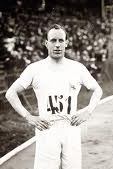
eliddellThe second half of winter is nearly always a test of patience; as the longer days of late winter tease that warmer weather is just ahead, the days of February refuse to yield the biting cold of winter. On this twenty second day of February I watched the morning weather report, predicting more accumulating snow with some sleet and ice thrown in for good measure. No worries, our church calendar gives us a gift this morning – the remembrance of Olympic athlete and missionary Eric Liddell. Few of God’s children can boast of having quicker feet, greater patience or the capacity to surrender personal comfort and safety for the good of others like Liddell. His accomplishments on the athletic field and in the missionary field are impressive, and his devotion to his family and those he served throughout his life are quite impressive as well (more information – Eric Liddell Centre). But as I walk my Lenten journey through these cold winter days, I am strengthened by Liddell’s example of strength and perseverance. As we remember him today we pray from the words of the prophet Isaiah: “Those who wait for the LORD shall renew their strength, they shall mount up with wings like eagles, they shall run and not be weary, they shall walk and not faint.” (Isaiah 40:31) Isaiah’s words are beautiful and inspiring, but the paradox of the words should not be lost: in waiting there is strength, and as we wait we will be able to fly, to run and to walk without losing the strength the LORD has given. It seems to me that these words of paradox describe Eric Liddell and exemplify his steadfast faith in God – he was one of the fastest men of his time, yet he showed great patience as he served God through his missionary work. I pray that we all may patiently wait for the LORD and then serve without hesitation when called…no matter the weather!

“God whose strength bears us up as on mighty wings: We rejoice in remembering your athlete and missionary, Eric Liddell, to whom you gave courage and resolution in contest and in captivity; and we pray that we also may run with endurance the race set before us and persevere in patient witness, until we wear that crown of victory won for us by Jesus our Savior; who with you and the Holy Spirit lives and reigns, one God, for ever and ever. Amen.” Collect for the remembrance of Eric Liddell, February 22nd

“Spending some personal time with Christ”

O'CollinsExperiencing Jesus by Gerald O’Collins, SJ; Chapter 2 – “Jesus the Meaning”

As we continue our journey through Lent, the second chapter of O’Collins’ book challenges us to consider our personal relationship with Jesus. O’Collins begins the chapter with a brief story of Augustine, a fourth century Christian of great renown, and his ill-conceived plan to wait for his teacher, Faustus, in order to learn all the secrets of life. Augustine was convinced that Faustus’ arrival would make all things known and his life’s plan would unfold clearly from the knowledge obtained from his insightful teacher. Faustus did arrive and impart his knowledge to Augustine, but everything in Augustine’s life was not neatly explained as he had thought. Life is a journey of unfolding truths, gained through experiences revealed to those with open minds and open hearts. The people of Nazareth struggled with this truth, as they rejected Jesus’ ministry among them as simply the works of the familiar carpenter. Although their actions may surprise us, we too can be guilty of trying to domesticate Jesus or suffer from over-familiarity with the powerful news of the Gospel…happily nodding to ourselves, “yes, I know that story and its lesson quite well.”

Lent is a season that particularly calls us to prayer and action in specific and personal ways. The lenten road is a journey that must be made with great intimacy and with personal intentions toward Jesus and all that Jesus invites us to be. O’Collins captures the intimacy and intentionality of Lent with the following words: “What ultimately matters is the ‘felt’ knowledge of our own experience…It is the same with our experience of Jesus. We experience him for ourselves or not at all. We pray to him ourselves or not at all. No one else, not even the dearest or closest person in our life, can take our place here. We do our praying to and our experiencing of Jesus personally…When Jesus knocks on our door, it is we who must open it to him. Here we cannot say to another person: ‘Please get up and see who is at the door of my heart.'” (p. 26) O’Collins’ insight is true for Lent and it is true for the days beyond Lent, when we continue to experience our ongoing and unfolding relationship with Jesus and with others. Throughout this holy season of Lent, let us renew and refresh our desire to seek Jesus in the grace given to us each day. The personal experiences that shape our lives and draw us into deeper relationships are forged through our desire and our commitment to our common life together.

“If I only had a holy Lent – finding God in the sacred wilderness”

Lent I (Luke 4:1-13)  02/17/2013

Listen to an audio recording <select here>

A few weeks ago Carol and I went to see the movie, Lincoln. As we sat in our seats waiting for the movie to begin, we of course were required to watch several minutes of previews of coming attractions. I often use the time before the movie starts to settle into my seat, turn off my phone, and generally prepare to enjoy the movie rather than watch the previews; but in this instance the preview of the coming movie, “Oz, The Great and Powerful” really caught my attention. The possibilities of creating the magical world of Oz with all the technology that Hollywood has available today is startling…and the preview also reminded me of watching the popular movie “The Wizard of Oz,” filmed in the late 1930’s. The characters of that classic movie are familiar to many of us; and their hopes and dreams are probably familiar to us as well. The scarecrow was certain he would have a better life, “if he only had a brain.” Dorothy apparently agreed with the scarecrow, singing along, “Why, with all the thoughts you’ll be thinkin’, you could be another Lincoln, if you only had a brain.” (that was not in the Lincoln movie, by the way) The Tinman’s life would be just fine, “if he only had a heart.” And the cowardly lion, well, he would be king of the forest “if he only had the nerve.” The lion is quite sure that if he was given some nerve he would be “as brave as a blizzard;” and we all know something about blizzards, don’t we? I can relate to the small group of dreamers on the Yellow Brick Road; in fact, just a week ago I remember having a few wishes of my own: if I only had a big snow blower; if I only had a truck with a plow; if I only had a ticket to some place warm and sunny. The desire to wish for that one powerful, yet elusive thing in our life can be very tempting indeed; the hope that everything will be just right if we only had that next big thing. Continue reading