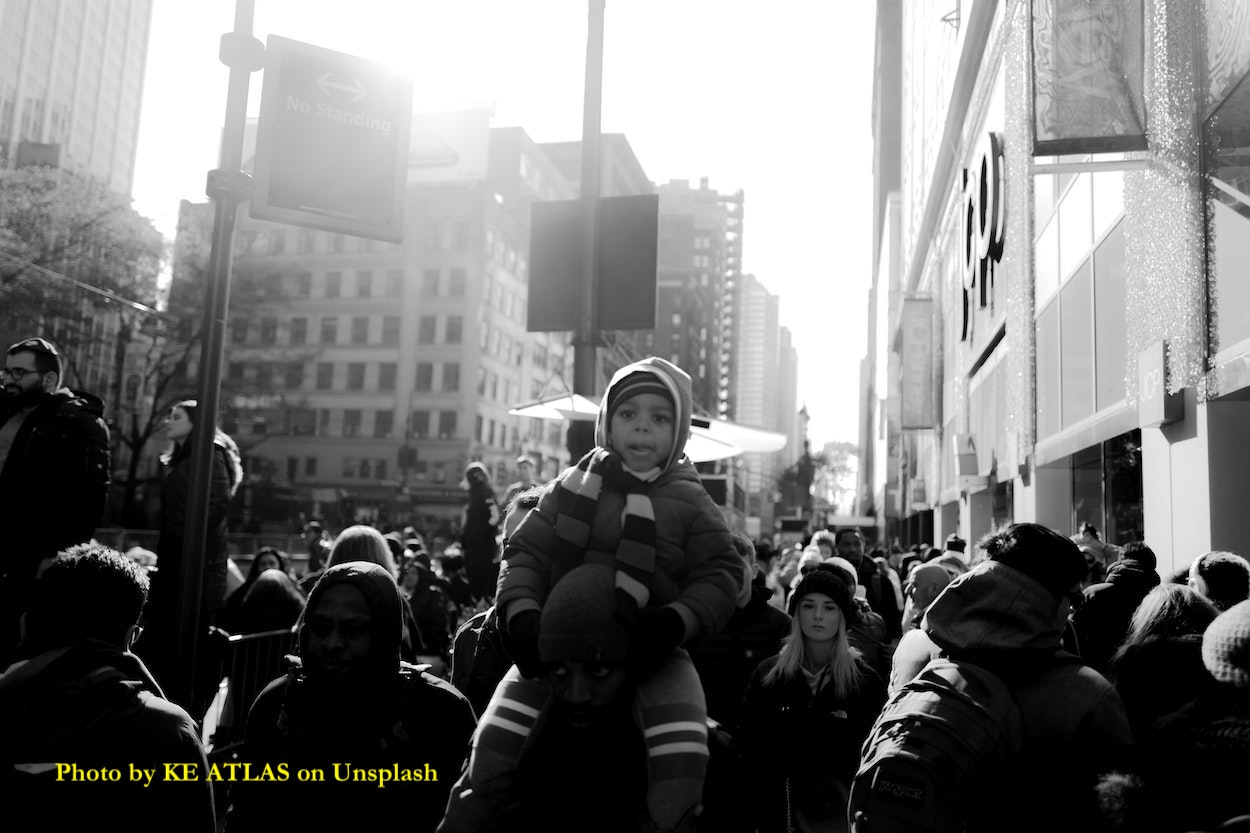
We begin chapter three of Mark McIntosh’s book, Mysteries of Faith, with a challenging statement: “What would you think if I told you that Christians believe God does not exist?” I was a bit startled at McIntosh’s statement for a few reasons: I suppose it’s startling to me when someone speaks for all Christianity, and to speak with such certainty about a subject that is large, complex, and mysterious…God’s creation, is a bit surprising. McIntosh goes on to develop his statement by saying that if God “existed” as other concrete realities “exist” in the world, that would imply that God was created as well. And God was not and never has been “created;” God is the eternal source of all created things. He also develops more nuanced understandings of God’s being throughout the chapter, with thoughts like, “a crucial difference between the Creator and all creatures is essence and existence: for while essence and existence are two quite different things for creatures, the very essence of God is to exist – not as something, but as the sheer loving act of existing itself.” And so, the mystery of creation is not something we might unwrap and understand in a single sentence.
Continue readingCategory Archives: Life & Learning

Lenten Book Study – Encountering the Trinity of God: Second Sunday in Lent
If you were asked to assemble a list of “the mysteries of faith,” I believe most people would have a rather long list; and the mystery of “God the Trinity” would be pretty high on most people’s list. The Christian idea of a trinitarian God: “One in Three and Three in One” is an idea that often sits just beyond the grasp of most people’s minds…at least most people I know. The trinitarian understanding of God is a belief that distinguishes the Christian faith tradition from many others; and is a mystery that helps describe some of the most intimate and important characteristics of God’s eternal love. This is the mystery that Mark McIntosh takes up in this week’s chapter of his book, Mysteries of Faith. The mystery of discovering God in our daily lives is often revealed to us as we reflect on the deepest desires of our spirits…it is there we often find resonance with the Spirit of God. McIntosh writes, “The beauty and power we long to possess are only the whispers of One who cannot be possessed but who lives by giving all away freely in love.” The beauty we discover in life is often the reflection of the true and everlasting beauty of God’s love.
Continue readingLenten Book Study – Talking with God: First Sunday in Lent
Where do we find God in our daily lives? I guess the first part of answering that question leans on one important assumption: we are looking for God. The complex and hidden mysteries of life can be searched out with many different lenses, depending on one’s belief structure. In our discussion here, we will presume that the lens that leads to greater understanding and wholeness of life is illuminated by finding and conversing with God. And, to be even more specific, (because the divine nature of “God” is a complex thing as well), we proceed with a particularly Western Christian understanding of God. I preface all that follows with this statement because our book study group reflected on what people throughout the world might think of the subjects we will soon encounter, and we agreed that the conversation would take different paths, depending on where the conversation was held. This follows an important point made by Mark McIntosh in his first chapter of Mysteries of Faith: context provides clues to conversation and helps us to discover greater meaning.
Continue readingLenten Book Study – 2024: Mysteries of Faith
Once again, welcome to the holy season of Lent! As I skim through my web journal, it seems that Lent has become the time I return to this space. Maybe one of my Lenten practices this year will be to try and cultivate a more sustained practice of writing here…at least, one can hope! This year our book study is focused on one of the books in the New Church’s Teaching Series. The book we will study is Volume Eight of the Series: Mysteries of Faith, by Mark McIntosh.
This book centers itself in a discovery of the mysteries of life…the mysteries of life that are centered in the ongoing creative being of the divine presence of God. There are many, many things we can easily see in life, and there are as many (if not more) things that are invisible; things we can only imagine, or maybe theorize from clues we discover. The focus of McIntosh’s book is on the mysteries of the invisible work of God in our lives…which becomes a bit less mysterious if we dedicate ourselves to deepening our relationship with the divine source of creation. The focus of McIntosh’s book is the practice of “theology,” which for some folks might seem like a scary word. However, I appreciate that McIntosh quickly spends some time describing the “practice of theology” and, in doing so, quickly disarms the potentially overwhelming aspects of the word and brings the practice to something we all do in our daily lives. McIntosh writes in the opening Acknowledgments: “If prayer is ‘something understood,’ theology is the struggle to put what has been understood in prayer into words…Theology, I believe, is a sharing in the mystery of God’s life; it is what happens as God the Holy Spirit works within us the mystery of the Father’s Word made flesh. And it is, I believe, a deeply Anglican intuition to draw our theology from our life of common prayer throughout the ages.”
We will explore the Mysteries of Faith, chapter by chapter, as we make our way through Lent. The book also provides a few study questions for group discussion, and I will share parts of those questions throughout our journey through this Lenten book study. I hope you can join me.
Blessings on your Lenten journey, where ever it may take you. Peace be with you.
Lenten Book Study – Good Friday and Final Thoughts
As we come to the end of our lenten journey and the end of our book study of Max Vincent’s “Because of This I Rejoice,” I wanted to say a bit about Vincent’s final thoughts regarding Good Friday and reflect on the study of joyful Christian practices throughout Lent. Although “joyfulness” and “lenten disciplines” are not two images that are commonly connected, I think Max Vincent has presented a thoughtful and spirit-led discussion for walking through Lent in this way. I also appreciate his use of Paul’s Letter to the Philippians, as the Apostle Paul has written most often and most powerfully of the importance and centrality of the cross in Christian belief and practice. The joyful letter to the Philippians served as the perfect outline for Vincent’s discussion of the Christian virtues and a life centered in the saving grace of Christ’s cross and resurrection.
Continue readingLenten Book Study – Joyful Giving: Sixth Sunday in Lent
As we enter this Sixth Sunday in Lent in our book study of Max Vincent’s “Because of This I Rejoice,” we explore one of the foundations of a healthy Christian life: joyful giving. I appreciate Vincent for beginning his chapter with the honest reality that life can be often difficult and present us with daunting challenges. He thoughtfully explains that we can have a deeply held gratitude for God’s goodness in our lives by realizing that even while facing difficulties, we discover God’s goodness is ever present, allowing us to give thanks for the blessings we enjoy. A joyful thankfulness changes one’s perspective and attitude. Although this may feel a bit too good to be true at first thought, I believe Vincent’s discussion of Paul’s advice to the Philippians has much to be considered. So, how can we welcome this attitude of joyful giving into our lives?
Continue readingLenten Book Study – Joyful Asceticism: Fifth Sunday in Lent
As we enter this Fifth Sunday in Lent in our book study of Max Vincent’s “Because of This I Rejoice,” we explore the often misunderstood practice of religious asceticism. The practice of spiritual asceticism is often associated with extreme practices of denial and medieval forms of penance. As Vincent writes in this chapter, the practice of spiritual asceticism need not be so extreme or bring us to the edge of our ability or desire to be in God’s presence. Vincent begins the chapter by providing a definition that helpfully defines the practices of spiritual asceticism that will bring us to a joyful place with God. The image of the beautiful starry night sky, framed by the rich red desert rocks better describes the spiritual practices Vincent imagines for our Lenten journey.
Continue readingLenten Book Study – Joyful Hospitality: Fourth Sunday in Lent
As we enter this Fourth Sunday in Lent in our book study of Max Vincent’s “Because of This I Rejoice,” we explore the important Christian value of hospitality. I believe Vincent presents the importance of hospitality in the Christian life very well, and explains Paul’s understanding of how hospitality is woven into nearly every aspect of our Christian lives. Similar to the Christian virtue of “humility,” hospitality seems not to be something that is sought after for its own sake, but something that is encountered by living life in a particularly Christ-centered way. I also appreciate Vincent’s discussion regarding the potential anxiety experienced by some folks at the very thought of doing all the “things that must be done” to be considered “people of hospitality.” He eases our minds by describing “the discipline of joyful hospitality.”
Continue readingLenten Book Study – Joyful Humility: Third Sunday in Lent
As we enter this Third Sunday in Lent in our book study of Max Vincent’s “Because of This I Rejoice,” we build on our previous reflections of prayer and Christian witness with a virtue often difficult to define: humility. I struggled with even the first task of discovering an image to place with this journal post of humility. How does one describe a human virtue that seems better defined as the “absence of self-centered characteristics” rather than a particular set of behaviors that help us say, “yup, there it is…that’s humility.” The photo I finally selected was a simple hand, making ripples in calm waters…hoping to expresses the “humble” satisfaction of making a small difference (the metaphor of the circular wave) that continues to grow in size and scope, with the outer rings of change never knowing where the wave began or who was its creator. I believe satisfaction with small tasks that build up the community of God, done with honest and authentic joyfulness in Christ, is probably the closest definition to humility one can find. Vincent describes this in his introduction when he writes, “humility comes through doing even the simplest task to honor God. Doing anything to honor God gives the task dignity and purpose.” Vincent writes of the example of Brother Lawrence, thought by many to be a model of humility, and describes Lawrence’s understanding of life in Christ: “his refrain became that he tried to carry out each task, no matter how great or small, as if done in the presence of God. This awareness of God’s presence marked his life with humility.” Brother Lawrence’s life is certainly a great example for us, but how can we enter into a similar “prayerful space” in the midst of our busy lives, in the middle of traffic, or cleaning up dinner dishes after a long day at work? I believe Vincent provides some thoughtful ideas of how we might find this “prayer space,” and it begins with living our lives as people connected to God and each other, in Christ.
Continue readingLenten Book Study – Joyful Witness: Second Sunday in Lent
As we enter this Second Sunday in Lent in our book study of Max Vincent’s “Because of This I Rejoice,” we move from prayerful person to witness of the Gospel. I imagine for many of us, if we are being honest, the idea of being a “Witness for Christ” strikes a bit of fear in our hearts. Vincent says as much as he begins the chapter, explaining the challenges of the duties, title, and perceptions of being an “evangelist.” Language is an important aspect of our lives…words not only have meanings, they carry around baggage (some intended, some not intended), and we must be careful to understand both the intended and unintended meanings of the words we use…and there are few words that have more baggage than the word “evangelist.” So, how can we be evangelists of the Good News of Christ without sending everyone around us running for the exits? Good question…
Continue reading