“Transformation through personal experience – Eyal Press’ Beautiful Souls”

BeautifulSoulsBeautiful Souls by Eyal Press, Chapter 1: Disobeying the Law

Eyal Press begins his book with a story of an unlikely law breaker, the Commander of the State Police in St. Gallen, Switzerland. Paul Gruninger was, by all accounts, a good and faithful civil servant for many years; a family man; a man that could be trusted with the law and order of his community. Yet, Paul Gruninger was indicted and convicted of breaking the very laws he was entrusted to uphold…how could this have happened? The simple answer is that there is no simple answer, especially in the difficult and dark days of the spreading horror of World War II in Europe. After experiencing an overwhelming influx of Jewish refugees throughout the 1930’s, Switzerland decided that there was no more room within its borders and after August 19, 1938, immigration for any reason was denied. Gruninger, serving on the border of Austria and familiar with the horrors that were present in that border country, could not bring himself to follow this new immigration law. He regularly accepted new immigrants fleeing Austria and falsely dated their paperwork with dates prior to August 19. His life-saving but law breaking activities were eventually discovered and he was promptly removed from his position and discredited for the remainder of his life. His actions may have saved countless lives, but he dramatically changed his life and the fortunes of his family. Why did the Commander of the State Police break the law? Continue reading

“Moral Conscience and Nonconformity – the price of saying no: Eyal Press’ Beautiful Souls”

Beautiful Souls, by Eyal PressBeautifulSouls

During the next few weeks Eyal Press’ insightful book will be examined in preparation for a book review prior to the start of our journey through Lent. The book explores the fascinating moral dilemmas and difficult circumstances of people who have become trapped between the ideals of their conscience and the unfolding actions of the society in which they find themselves. A small group of people appear to have the moral courage to resist the path of least resistance and cling to their deeply held principles; what is their secret? In Press’ own words: “Why, even in situations of seemingly total conformity, there are always some people who refuse to go along. This is a book about such nonconformists, about the mystery of what impels people to do something risky and transgressive when thrust into a morally compromising situation: stop, say no, resist.” (Beautiful Souls, p. 5)

The season of Lent brings us on a journey with Christ as he walks the difficult last days of his public ministry and uncompromisingly sacrifices everything at Golgotha; he is willing to go to any length for those he loves, including death on the cross. The time of Lent is a time for reflection; a time to go deeper into one’s personal faith; a time to explore the call of discipleship and the personal cost associated with a deep and active faith in Christ. Eyal Press’ book, Beautiful Souls, will help raise important topics and lead us in deeper personal understanding and awareness.

Please read a New York Times Sunday Book Review of this book <select here>

“And so it ends, but do we all go to Heaven? C.S. Lewis’ The Great Divorce”

Lewis Great DivorceThe Great Divorce by C.S. Lewis; chapters 12-14

These few chapters conclude the fantastical tale of Heaven and Hell by C.S. Lewis. Chapter 12 begins with the introduction of a dazzling woman whose goodness and light spreads out like the widening ripples of a wave. We learn that the woman would have been barely noticed on earth but her goodness was so wonderful that she is sparkling in Heaven, where all inner goodness shines for all to see. She meets her departed husband, a man who is a ghostly image of a man, a man still clinging to his pride and self-righteousness. The dazzling woman asks the man for his forgiveness for any wrongs she may have committed and invites him to do the same, leading him toward the ultimate understanding of self-emptying love. His love, however, has conditions, stories, and excuses connected to it. As much as he might want to let go, he cannot bring himself to the full understanding of love.

Chapter 13 continues the story of the dazzling woman and the ghostly man, leading the reader on a journey that brings us to an important question: can those in Heaven truly be happy and filled with joy knowing that others remain in the torments of Hell? The narrator of the story cannot bear to think that true joy can be savored while aware of the plight of the damned. The heaviness of this thought brings our narrator to think that only when everyone is within Heaven’s gate can true joy be had…but our narrator’s heavenly guide says, “not so fast!” In one of Lewis’ most provocative thoughts of his tale, Lewis offers the following proposition: “What some people say on Earth is that the final loss of one soul gives the lie to all the joy of those who are saved,” and his guide responds, “Ye see it does not.” (p. 135) The heavenly guide continues to explain why not, “The demand of the loveless and the self-imprisoned that they should be allowed to blackmail the universe: that till they consent to be happy (on their own terms) no one else shall taste joy: that theirs should be the final power; that Hell should be able to veto Heaven.” (p. 135) In the concluding lines of the chapter Lewis’ makes it plain that Heaven shall not wait on those pride-filled and stubborn ones who refuse to let go of their own designs…God is the One true source of love and light and Heaven will move on without them, should they choose to absent themselves from God’s abundant love.

The final chapter tells us that the narrator was simply having a vivid dream; a dream of the heavenly places and choices that are set before us all, but a dream nonetheless. And as with any dream, some bits of the story remain quite vivid and real, other bits appear to slowly disappear into the fog, but the entire story lingers and brings us into conversation with questions that seem to hold some universal truth.

“Was Milton right about free will: the choice of every lost soul – ‘better to reign in Hell than serve in Heaven’ – C.S. Lewis’ The Great Divorce”

C.S. Lewis’ The Great Divorce – chapters 8 – 11

Lewis’ tale of fantasy continues with more characters and many, many more questions for us to consider. Throughout these chapters Lewis takes up the important questions of free will (can the ghostly people actually stay in the land of Bright Spirits or must they return to the bus); is God full of love for everyone (or are the ghostly people condemned to return to the bus and their brief trip is a vehicle of torment); and how can one gather courage to walk in to the land of brightness (the journey appears to be impossible). And many more questions that continue to bubble up through and between the lines of Lewis’ wonderful story. Continue reading

“The humbling challenges of approaching God – ‘Thinking of going back?’: C.S. Lewis’ The Great Divorce”

The Great Divorce by C.S. Lewis; chapters 4-7.

Previous chapters of Lewis’ tale have successfully brought us to a fantastical world of bright spirits and unimaginable beauty, but now the shadowy figures of the dimly lit Town must leave the bus and find their way in to this strange and wonderful new world…easier said than done. We meet different ghostly characters in each successive chapter, each with their own restrictions and flaws that serve as boundaries to the bright land beyond the bus. Continue reading

“Leaving the empty comfort of Self: C.S. Lewis’ The Great Divorce”

The Great Divorce by C.S. Lewis; chapters 1-3

C.S. Lewis’ story of fantasy in The Great Divorce is a rich and twisted tale of leaving the dismal yet comforting world of self in an effort to trust others, and especially trust God, and take the necessary changes to break-out from one’s world of self and enter the love of God. The tale is a story of Good and Evil; a tale of Heaven and Hell, but a believable tale where the greatest evil is wrapped in apathy and selfishness, which makes the story all the more believable…and therefore frightening.

In the Preface of his book, Lewis sets the stage for the journey that will be told in his story; a journey of striving toward God’s glory, the holy “working out” of one’s salvation. For those who have sought the Reign of God and have finally come to know the glory of God at their journey’s end, of them Lewis writes, “in that sense it will be true for those who have completed the journey (and for no others) to say that good is everything and Heaven everywhere. But we, at this end of the road, must not try to anticipate that retrospective vision. If we do, we are likely to embrace the false and disastrous converse and fancy that everything is good and everywhere is Heaven.” (preface, pg. IX) Lewis’ insight and warning to those of us still making our earthly journey is an important and humbling message that needs to be heard now more than ever.

Chapters 1 and 2 are devoted to descriptions of a dingy town that we will learn little about, other than it is a dismally comforting place; a place where anyone’s bleak expectations can be fulfilled with merely a wish. The story’s action quickly centers around the bus station as the dingy town’s inhabitants wait for a magical bus. The line is quite long, but tension and disagreement among the group quickly thin the line to just half the bus’ capacity. The bus’ arrival to the bright and strange new land beyond reveals the true images of the travelers aboard the bus…and the revelations are unsettling!

Chapter 3 provides an introduction to the new land beyond the dingy town and we soon understand that this must be Heaven. Everything is quite different and nothing can compare to the dingy town, but the differences can become overwhelming and we watch as many of the travelers retreat to the safety of the bus. For those brave enough to press forward, they huddle together as the people of this land approach. They are people who can only be described as those filled with a great light whose appearance was very grand and seemingly ageless. “One gets glimpses…of that which is ageless – heavy thought in the face of an infant, and frolic childhood in that of a very old man.” The wisdom, joy and light of those things eternal and close to God fill this place beyond the dingy town with wonders that Lewis will explore in the remainder of his tale.

“‘Evil can be undone, but it cannot develop into good.’ C.S. Lewis’ The Great Divorce”

The Great Divorce, by C.S. Lewis

Over the course of the next few weeks, C.S. Lewis’ classic book will be examined in preparation for a book review at the end of October. The subject of Good vs. Evil, Heaven vs. Hell, is a subject that can fill bookshelves and yet defy an overwhelming conclusion. Like Lewis himself, we will through caution to the wind and jump in to the deep-end of this subject, using his journey through both Heaven and Hell as our guide.

Lewis describes his intention for The Great Divorce in its Preface, stating that his work will bring the reader on a journey that is quite intentionally a fantasy, but a fantasy with a moral. Lewis clearly presents his case that good and evil are available to all; and with evil seemingly lurking around the next corner the choice for the good is an intention that requires personal attention and faithful (and courageous) practice. I am reminded of the Apostle Paul’s words of encouragement to the Philippians, “work out your salvation with fear and trembling; for it is God who is at work in you, enabling you both to will and to work for his good pleasure.” (Phil 2:12b-13) We are not alone, for “it is God who is at work in you” but we are not passively waiting for some external improvement…no reclining back like we are at the dentist’s office waiting for the pearly white crown to be placed over the ugliness of what lies beneath; this is the real road of discipleship.

Lewis makes us want to pursue that road by ensuring that the wisdom of the journey will bring us into God’s presence. He writes that for those who have sought the Reign of God and have finally come to know the glory of God at the journey’s end, their wisdom can be only known from the journey’s far end: “In that sense it will be true for those who have completed the journey (and for no others) to say that good is everything and Heaven everywhere. But we, at this end of the road, must not try to anticipate that retrospective vision. If we do, we are likely to embrace the false and disastrous converse and fancy that everything is good and everywhere is Heaven.” (Preface, pg. IX)

And so our journey with C.S. Lewis through both Heaven and Hell begins and his insights of good vs. evil through his story of fantasy promises to enlighten us in the days ahead. As Paul prayed for the Philippians, so we pray, “that your love may overflow more and more with knowledge and full insight to help you to determine what is best, so that in the day of Christ you may be pure and blameless, having produced the harvest of righteousness that comes through Jesus Christ for the glory and praise of God.” (Phil 1:9-11)

“Prophetic voices in our modern world: where have they gone?”

Brueggemann (On Being)

“In those days the word of the LORD was rare; prophecy was not widespread” (1 Samuel 3:1b, TANAKH translation)

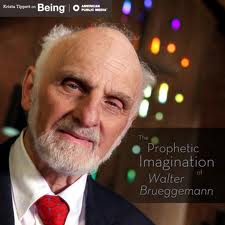
In a recently released interview (12/22/2011) by Krista Tippett (“On Being,” by APM), Walter Brueggemann (Biblical scholar and well-known author) discussed the poetry and imagination of the Old Testament prophets. His interview was thoughtful, insightful and compelling, but this is what I have come to expect of him nearly every time I have read one of his books or listened to him discuss a wide array of topics. Brueggemann’s wisdom is not limited to the Old Testament. (For more information on his interview with Krista Tippett, please follow the link: <here>) One of the most profound and striking sections of his interview came when questioned about the preacher’s ability to prophetically speak to a frenzied and hurting world; a world that is so accustomed to the “idealogy of consumer capitalism”; especially when the preacher is part of that world and shares the language and the culture of those whom are listening for the prophetic word to be spoken. Brueggemann responded: Continue reading

“Help save the world” – The Millennium Development Goals

The extreme challenges of global poverty and need can easily overwhelm those who take up the fight to beat these challenges. The Millennium Development Goals have been established to provide a structure to reduce the extreme conditions of those in need and begin the process of eliminating of the horror of poverty and suffering throughout the world and act as responsible citizens of the world. BUT WHAT CAN WE DO? Glad you asked – read on! Continue reading