
As someone who enjoys contemplative prayer, and especially prayer modeled after Ignatian spirituality, the works of William Barry, SJ, have been particularly important to me. Barry’s book, Finding God in All Things, is a wonderful and helpful spiritual guide…and the title is a great reminder that God is present beyond the walls of the church, where many of us like to keep God throughout our week. As spring turns to summer, finding God in the beauty of the flowers (forgiving them their pollen), open green fields, and the warmth of the sun can often seem rather obvious. However, the truth in discovering God in all things is to find God present in the red light on the way to work (reflection time?), the summer road construction delays (smoother journeys ahead?) and that pudding that you happened to have at lunch…pudding at lunch? As a fan of chocolate pudding, I often have a small cup of pudding at lunch and have recently taken to the idea of discovering the “picture of the day” on the underside of the foil covering.

Recently I was greeted with an angel blowing a horn…OK, maybe you have to use your imagination to see the angel, but without too much effort I believe “Hark! the herald angels sing” will be ringing in your ears. And I hope shortly after the song fades from your mind, you will continue your ongoing discovery of finding God in all things. After all, tomorrow is the 25th…May 25th, but that’s close enough for now.
Category Archives: Reflections
“Will Our Children Have Faith?”
Will our children have faith? An interesting question, and the title of an informative and insightful book by John Westerhoff, III. Although first published in 1976 and revised in 2000, the book is just as relevant as the first day it was printed. And you might wonder, is it important that our children have faith…is this aspect of our lives important to us, both individually and collectively? The Pew Forum on Religious and Public Life published a study in December 2009 entitled “How Religious is your State?” – the results varied, but the national averages showed that slightly more than half of those surveyed thought weekly worship attendance and daily prayer were important, while about 70% were certain of the existence of God. So, at least in some degree (and definitions vary widely, of course) faith in God still has significance in our society. This begs the question, if something is important, what are we doing about it? Westerhoff opens his book with the following words: “It is a truism that Christian faith and education are inevitable companions. Wherever living faith exists, there is a community endeavoring to know, understand, live, and witness to that faith.”[i] Again, what are we actually doing about the development of our faith; how are we “endeavoring to know, understand, live, and witness to that faith.” Certainly there are many wonderful programs alive and well throughout the country, but there are also many disturbing trends that appear to be going unnoticed. Continue reading
“A dog, a flat tire, and the season of Lent”
All diagnoses were uncertain and any relief based upon medical science appeared to be temporary, at best. My personal attachment to “man’s best friend” comes in the form of an eight year old chocolate lab. Since her earliest days she has endured recurring bouts with bladder infections. As a young pup and for her first few years these bouts were annual events. As the years added up, the frequency of the infections increased as well. She would be in discomfort only during the period of the infection itself and she responded very well to medication – nothing to worry about; maybe scratch your head and wonder why, but nothing to worry about until recently. The frequency passed semi-annual a while ago and was now heading toward a frequency greater than bi-monthly. After exhausting all non-invasive, medicine only, options and considering that she likely has several years of quality life remaining (the good LORD willing), we opted for the surgical option that promised to provide clearer answers and hopefully cure things once and for all…that was a few weeks ago and all is going very well. However, a significant portion of her bladder was removed (which will grow back) and until she has fully recuperated we take her outside every two hours or so, regardless of the time of day. My kids are now adults and I never thought I would have a small baby to care for again, but I certainly have one now…and I am very tired. Yesterday I was finishing a rather busy day and thinking about my dog’s doctor visit today (her re-check appointment). As I headed home from my meeting at the church a bit after 9pm I was thinking of the things I must do in the days ahead and only after driving a few minutes did I notice my car was pulling to the right. Fortunately I did not hear anything out of the ordinary and my drive home is short; when I arrived home my front tire was flat! Continue reading
“Prophetic voices in our modern world: where have they gone?”
“In those days the word of the LORD was rare; prophecy was not widespread” (1 Samuel 3:1b, TANAKH translation)
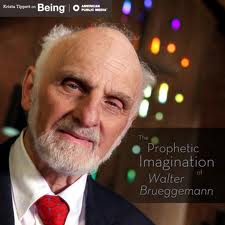
In a recently released interview (12/22/2011) by Krista Tippett (“On Being,” by APM), Walter Brueggemann (Biblical scholar and well-known author) discussed the poetry and imagination of the Old Testament prophets. His interview was thoughtful, insightful and compelling, but this is what I have come to expect of him nearly every time I have read one of his books or listened to him discuss a wide array of topics. Brueggemann’s wisdom is not limited to the Old Testament. (For more information on his interview with Krista Tippett, please follow the link: <here>) One of the most profound and striking sections of his interview came when questioned about the preacher’s ability to prophetically speak to a frenzied and hurting world; a world that is so accustomed to the “idealogy of consumer capitalism”; especially when the preacher is part of that world and shares the language and the culture of those whom are listening for the prophetic word to be spoken. Brueggemann responded: Continue reading
“The Road to Calvary: Prepare to prepare”
Lent is just a short week away and we need to get ready. Lent is the season of preparation for the coming of Easter; the coming of the day in which we celebrate our gift of eternal life – the death and resurrection of Christ and our reflection of what it means for us to participate in Christ’s death and resurrection. So you mean that Lent is a time of preparation and I have to prepare to prepare? Exactly. Lent is 40 days (not counting Sundays, at least in most Western Christian traditions) and 40 days is not a lot of time. At least not enough time in our crazy time-constrained culture to begin wondering how we might effectively “reflect” and “open ourselves” to the possibilities of Christ in our lives if we begin our wondering some time after the second Sunday of Lent. So, why not be the first one on the block to have your Lenten practices decided? You can tell your friends that this weekend is to Lent what “Black Friday” is to holiday shopping…and you don’t even have to sleep in a tent in front of Best Buy!
What can you do; what should you do? ANYTHING. Just do anything, preferably something that you have never done before unless “that previous thing” was incredibly helpful to your spiritual life. If you have some time available for vacation and a retreat center is nearby (and nearly everyone has some type of retreat center nearby), go on a Lenten retreat. Read a book, read the Bible, follow the Daily Office using the Episcopal Prayer Book (or go online here if it’s easier). If you are incredibly busy (and who isn’t incredibly busy, unless you have recently retired and you haven’t told anyone yet, so they can’t ask you to do several things in your “free” time), then simply find a few spare moments to pray for those you love, those who love you, and especially for those you don’t love, and pray for the world while you are at it…the world could use a prayer or two. Just do anything throughout the 40 days of Lent, and do it consistently. Lent, after all, is a time for thoughtful and disciplined attention toward God so we are prepared to receive His gift of saving Grace on Easter morning.
As for me, I will be reading Jane Shaw’s new book, A Practical Christianity: Meditations for the Season of Lent. You can purchase the book online at Cokesbury bookstore by following the link here. I have not read the book, but am following Bishop Jeff Lee’s (Episcopal Bishop of Chicago) invitation to read the book throughout the season of Lent. I look forward to walking with you as we travel the road to Calvary to Easter morning. I invite you today to prepare for the season of preparation; to get ready for Lent so that your Lenten journey may be fruitful and you may hear God calling you in the unique manner that God speaks to all His children.
“Yes, you can ‘tebow’ too”
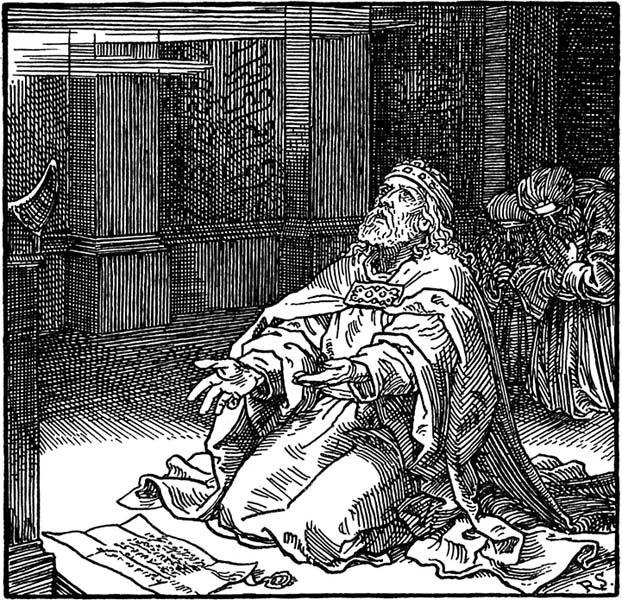
“Hezekiah went up to the house of the Lord and spread the letters before the Lord. And Hezekiah prayed before the Lord.” (2 Kings 19:14-15) King Hezekiah began to reign over the kingdom of Judah at the age of 25; he began his reign around the year 700 BC. Hezekiah is held up as one of the most righteous kings before God, compared in esteem to King David for his accomplishments. The people under the rule of Hezekiah knew both good times and challenging times, even though their king was much beloved and did what was right in the sight of the Lord. (2 Kings 18:3)
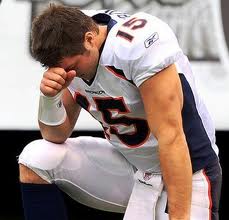
Much has been made recently of another young man about the age of 25, Tim Tebow, and the electrifying victories he and his team, the Denver Broncos, have had in the past several weeks. The high point of the media frenzy came with the Broncos overtime victory against the Pittsburgh Steelers in the first week of the NFL playoffs. Tebow has attracted attention for many reasons, but the public display of his Christian faith has probably been at the center of all the attention. Gone are his “black eye paint” biblical passages (against NFL rules), but his one-kneed bow to God has remained a steadfast symbol of his devotion. As the Broncos continued to win, sometimes inexplicably it seemed, the public chatter was that Tim’s “tebowing” gave him a direct line to God. Even Saturday Night Live needed to weigh in with a few jokes…when SNL pokes fun at you, it’s safe to say you have arrived…at least for 15 minutes. With no ill feelings toward Tim Tebow or the rest of his teammates, there is at least a small part of me that was glad that Tom Brady and his team set the record straight when it comes to God: pray to God for a relationship with God and to deepen your spiritual growth and awareness…not to win at life. And this is not to say that Tim Tebow prays to win; it is very likely he prays to talk to God…and so can you.
If the Denver Broncos won the Super Bowl this year, never would the American public be more confused about God and prayer since, well, since ever probably. You can, and should, “tebow” pray every day in order to become closer to the spiritual and mystical realities of the power and love of God. Win, lose or draw in life; you will win every day that you pray.
“Reflection of the Daily Office: Do not hide under a bushel basket”
Daily Office for 01/20/2011 – Gospel reading: Mark 4:21-34
Today’s Morning Prayer lessons presents us with a few short parables, beginning with the reasonable advice that one does not place a lighted lamp under a bushel basket. Beyond the concern that the basket will go up in flames, the parable means to teach that a light is intended to lighten its surroundings, not quietly live a peaceable life in solitude. This advice might seem rather obvious, but if we can imaginatively place ourselves in the role of the light we might find a certain level of discomfort with the attention and responsibility of sharing our gifts with others…24/7, as is the popular saying these days. The parables in Mark’s Gospel account that follow the “light & the bushel basket” parable emphasize this lesson – the growing seed and the might of the tiny mustard seed both point to the strength and vitality of appropriately nurturing one’s gifts as God intends.
Today we remember Fabian, Bishop of Rome and Martyr of the Church in the year 250. Fabian is famous for his election as Bishop because he was elected by the favor of the crowd that gathered to select the bishop – and Fabian was not even an ordained minister at the time. Although not familiar with all the details of church administration, he put his gifts to good work and was able to serve the people of Rome with great result. Never fearing to do what was required of him, Fabian was eventually martyred during the Christian persecutions ordered by Decius. Fabian is remembered as an example to us that we have been given gifts, for the good and happiness of our lives and for the good of others. But we must not be content to sit at home and quietly use our gifts…or not use them at all. We must boldly go into the world and share what has been given to us and, like a tiny mustard seed, the impact of our actions will make a mighty difference in the world.
“Reflection of the Daily Office: Humbly walking our Advent journey”
Daily Office for 12/01/2010: OT Reading – Isaiah 2:1-11
The beginning of the second chapter of Isaiah, which we hear this morning, is calling out the new world that is to come – a world of love and justice; a world where there is no more war or hatred. Likely, we feel far removed from this world and Isaiah reminds us that we have forsaken the ways of God and are indeed far removed from God’s world of love and justice. With vivid and compelling words, Isaiah describes the current state of affairs and provides us with an important insight toward the accomplishment of living in the peace of God’s presence – humility: “The haughty eyes of people shall be brought low, and the pride of everyone shall be humbled; and the LORD alone will be exulted in that day.” (Isaiah 2:11)
These early days of Advent have been shouting out “humility” from many sources. In addition to hearing the testimony of Isaiah, the reflection from “Watch for the Light” for Nov. 29 was entitled, “In Defense of Humility” by Bernard of Clairvaux. Bernard’s thoughtful essay begins by reflecting on Scripture, “The virtue of humility is always found closely associated with divine grace: ‘for God resists the proud, but gives grace to the humble’ (James 4:6).” Bernard then continues with a reflection on the humility of Mary upon hearing that she will become the mother of our Lord Jesus Christ. “Mary then replies with humility, that the dwelling of grace may be prepared. How sublime is this humility, which is incapable of yielding to the weight of honors, or of being rendered proud by them! The mother of God is chosen, and she declares herself his handmaid. It is in truth a mark of no ordinary humility that even when so great an honor is given her, she does not forget to be humble. It is no great thing to be humble when in a low condition; but humility in one that is honored is a great and rare virtue.”
As we walk our Advent journey, we can look to Mary as an example of humility before others. Pride separates us from God and from others as we seek to build ourselves up; humility brings us together and builds up that which God seeks for us. As a parishioner recently reminded me after an early Sunday service, one of the most beautiful verses of Scripture is from the Book of Micah: “He has told you, O mortal, what is good; and what does the LORD require of you but to do justice, and to love kindness, and to walk humbly with your God?” (Micah 6:8) Walk humbly through this season of Advent and know that God is with you.
“Reflection on the Daily Office: Jonah and the gold mine”
Daily Office for 10/13/2010: OT Reading – Jonah 1:17 – 2:10
This morning we hear the frightful adventure of Jonah, trapped in the belly of a whale for 3 days. One cannot hear this story and not think of the similarly frightful ordeal of the 33 Chilean miners, trapped more than 1/2 mile below the surface of the earth for almost 3 months. The reading from Jonah captures Jonah’s prayer to God, seeking relief from his current state of bondage in the whale’s belly. God hears Jonah and we are relieved to hear that the whale frees Jonah, spitting him on to the dry land. Again, we are reminded of the ongoing episode of the miners, who are in the midst of rising from the tomb of their entrapment and are free – free to be with their families and friends and free to live life again, but to live life in a very different manner as some of the freed miners have already testified.
We, too, can become entombed by things that contain us: contain and consume us if we allow them to become the center of our lives. “Those who worship vain idols forsake their true loyalty.” (Jonah 2:8) An exercise for healthy living that always provides benefit is to consider the people and events in your life that hold great significance and reflect on how much time and attention you are giving them. As one of the miners, Mario Sepulvedo, recently told CNN News, “I buried 40 years of my life down there, and I’m going to live a lot longer to be a new person…I think I have learned a lot of wonderful lessons about taking the good path in life.” Like Mario and Jonah, take the time to pray to God, bury the false idols that hold you back and take the good path in life.
“Reflection of the Daily Office: humility, gratitude & love”
Daily Office for 10/07/2010: Gospel – Luke 7:36-50
This morning we join Jesus dining at the home of a Pharisee named Simon. In the midst of the invited guests, a “woman of the city” (a sinner) enters into the home of Simon and displays great affection toward Jesus – washing his feet with her tears, kissing his feet and anointing his feet with ointment. Simon and his invited guests watch the woman’s display of hospitality with a critical eye, knowing she is a sinner; and they question Jesus’ ability to perceive her true character due to his acceptance of her hospitality. Simon and his dinner guests soon learn that the difficulty in perceiving God’s will rests with them.
Jesus tells a short parable story to highlight the truth of forgiveness: the one who experiences forgiveness of many sins is also filled with much love. The first step in the woman’s journey toward Jesus is recognizing that she has sinned. This is also the first step in our journey – recognizing that many of our actions are centered in what is best for us; our priorities are developed with an internal focus rather than the outward love of others. We can discover great benefits from simply recognizing this condition and opening ourselves, in prayer, to how we might approach our lives differently. Even if we do not begin with actions, but only in reflection, we soon discover that honest reflection leads us to hear Christ’s Gospel with open ears. Hearing the truth of the Gospel and reflecting on our lives leads us to humility, gratitude, and love.