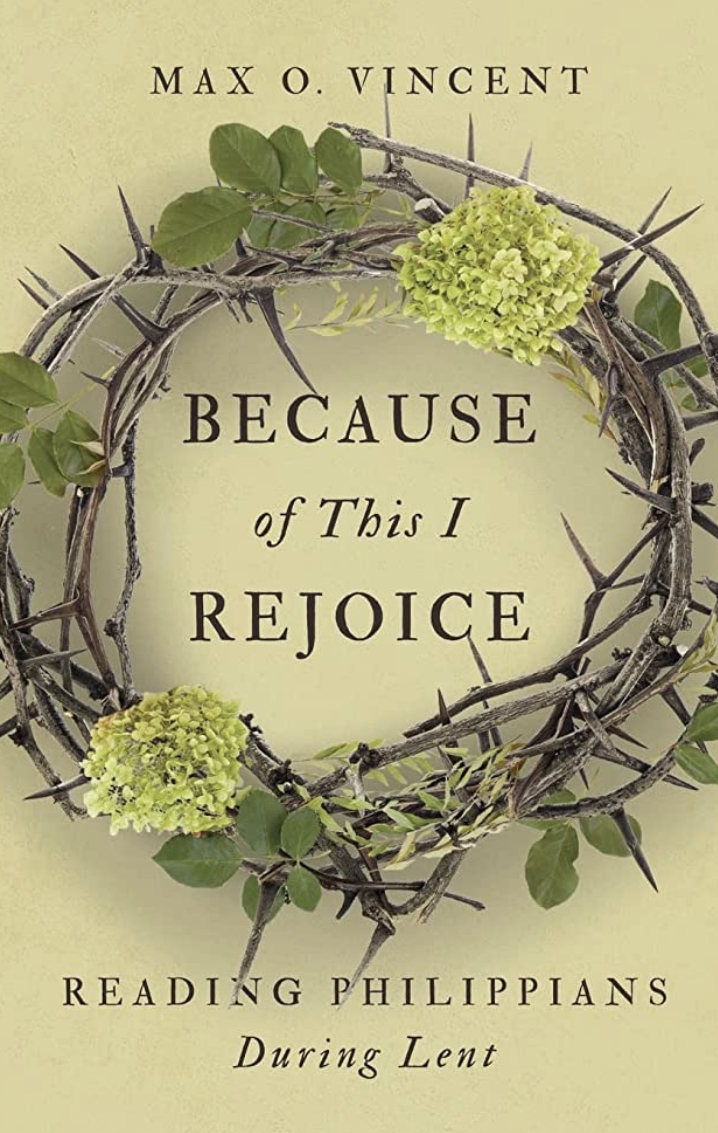
We begin our Lenten book study of Max Vincent’s book, Because of This I Rejoice, with the introduction: Laughing on Ash Wednesday. For those long familiar with Ash Wednesday, I imagine your first reaction to Vincent’s introduction title is something like, “wait, does he even know what Ash Wednesday is about?” Vincent says as much himself as he describes friends’ surprise at his joyfulness and enthusiasm for a day filled with dusty ashes, penitential prayers, kneeling, and a very particular focus on human mortality. It would seem the most hopeful thing one could think about Ash Wednesday would be a pleasant relief it lasts for 24 hours rather than a season. But this isn’t Vincent’s understanding, and a reflective read of the introduction helps us to prayerfully discover his joy.
Continue readingCategory Archives: Spiritual Living
Lenten Book Study – 2023: Because of This I Rejoice
Welcome to Lent…the 2023 edition! It seems that I have taken a web journal writing break since Lent of last year…something I seem to do quite often, regardless of how many times I promise myself I will write more often. Oh well…Lent is the season to put our failings aside, dust ourselves off, and try again…so, here we go. This year, I will be following Max Vincent’s book, “Because of This I Rejoice.” Vincent’s book is designed as a Lenten study, so it lends itself to the season, and contains reflection questions, etc., which will help our spiritual journey throughout the season. I am hoping this makes your experience a bit more straightforward, as the chapters and sections align with the weeks and days of Lent, and Vincent helpfully provides some additional Scripture passages if you would like to engage in some additional reflections throughout the week.
Throughout our Lenten book study, I will be posting a separate entry for each Sunday in Lent, which corresponds to each chapter within his book. I will also post some mid-week reflections which follow the Scripture passages he outlines at the end of each chapter. Vincent is not very specific how he intends these mid-week reflections to be done (which is probably a good thing), but I will follow the format here: Each chapter will be for the Sunday of Lent (for example, Chapter One will be the First Sunday in Lent), and then each of the additional Scripture passages will follow for the Monday through Saturday after that Sunday. I hope that makes sense, but if not, please read the Scripture as your schedule allows, and create your own Lenten practice of prayer and reflection.
I pray you will have a holy and blessed season of Lent, however you may choose to spend your time finding God in your life. If you choose to join us in our Lenten book study, please know a few hard copies of the book are available from the church, but this book is also available from Amazon as an e-copy book. The link is here: Because of This I Rejoice.
Blessings on your Lenten journey!!
Lenten Book Study – “Receiving Jesus: To Go”
The sixth practice of following the Way of Love is the practice “To Go.” Bishop Budde once again provides spiritual guidance with wonderful insights (her own and quotes of wise people) and an even measure of encouragement and thought provoking questions to help the reader wrestle with the practical aspects of living and witnessing to their faith in God. Budde’s book, “Receiving Jesus: The Way of Love,” continues to help dive deeply into one more practice of living an active and fruitful life in relationship with Christ. The holy work of “going” requires patience, trust, and encouragement to overcome the obstacles we might encounter. As Budde writes, “There is risk in going, a vulnerability in crossing boundaries that conspire to keep us separate from one another. Yet such risk is an expression of love. Our going activates love within and among us that would otherwise lie dormant. Paul writes in his letter to the Philippians (2:5-8) of Jesus’ love as the ultimate border crossing and urges us to follow his example.” How can we begin the process of trusting God enough to have the confidence “To Go?”
Continue readingLenten Book Study – “Receiving Jesus: To Bless”


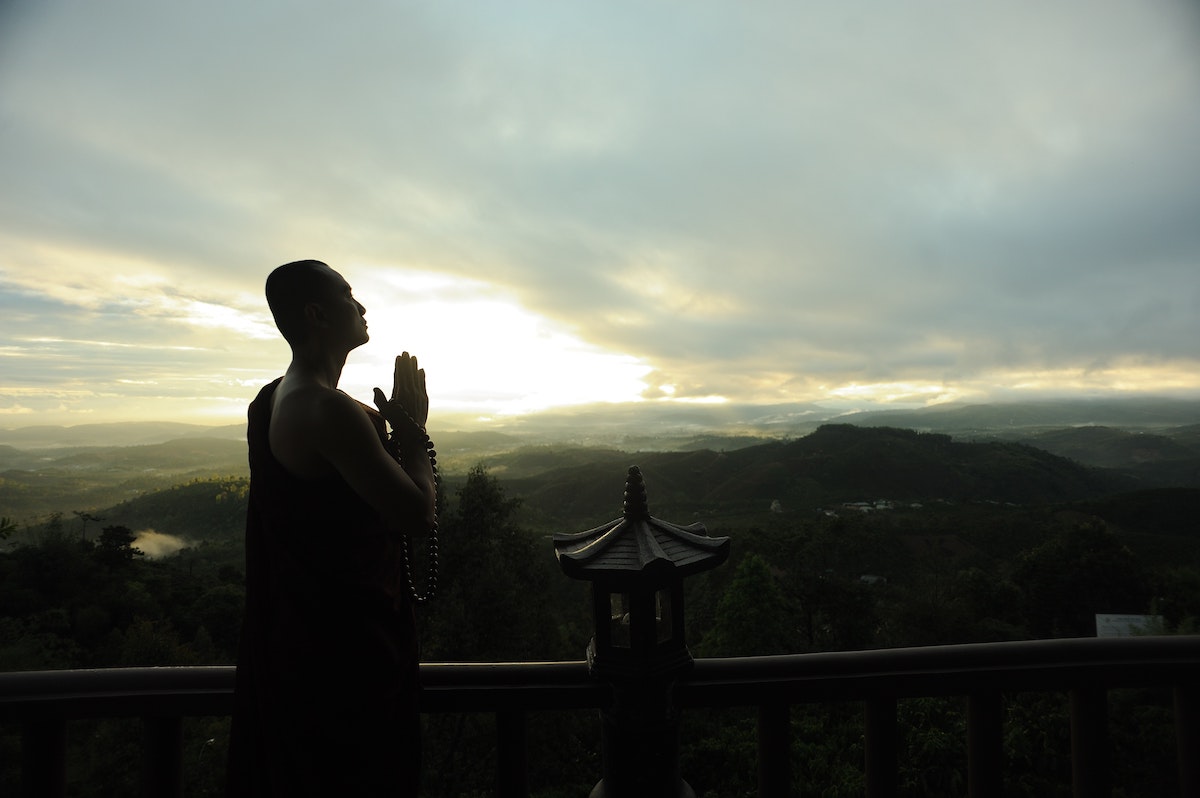
The fifth practice in following the Way of Love is the practice of Blessing. This practice, perhaps more than any other practice in the Way of Love’s seven practices, is often misunderstood to be a special “reserved practice” for clergy or those who have made the “religious life” their daily life’s work. Several years ago, while serving at my first church as associate pastor, a very busy Sunday morning before worship required me to find someone to read the first Scripture lesson and say a blessing for the planting of a new tree in the church yard. With limited time available, I decided to “divide and conquer” these tasks – I asked the newly arrived Deacon to join the church school group outside and bless the tree, while I searched for a reader. After successfully finding a willing reader, I made my way to prepare for the upcoming service…only to be greeted by a frantic Sunday School Director, who was certain the tree would not be blessed before the service! I assured her I sent the Deacon to say the blessing; and she replied, “Yes, the Deacon is standing next to the tree, but refuses to bless the tree because they taught all the students in Deacon school, only Priests can do that!” Off to the tree I went, said the blessing, and then, after Sunday services, I assured the Deacon that God does not hear the blessings of Priests alone…that all of God’s children are sources of the eternal and perfect Love of God, and the blessings of everyone are heard quite equally. I am very happy to say that Bishop Budde shares this idea of blessings in her chapter of the practice of Blessing. To bless is to invite the reality of God’s Love and Goodness into our awareness; often a state of God’s presence that already exists, but perhaps we are still working toward that reality. It is like the picture above: the dim light of early sunrise hides many features and marks of beauty that exist in God’s world, and the blessings of light bring all these marks and moments of Love to our waking consciousness. To bless is a powerful practice of the Way of Love.
Continue readingLenten Book Study – “Receiving Jesus: To Worship”
The practice of worship is taken up by Bishop Mariann Budde in chapter four of her book, “Receiving Jesus: The Way of Love.” Gathering as God’s people is one of the most important elements of what it means to be disciples of Jesus Christ, the Incarnate Word of God. I believe this to be true for many reasons, but perhaps primarily because as Christians, we are followers of the one we call Immanuel, “God with us,” the “Incarnate Word of God.” The foundational understanding of Christians is that God so loved us, he sent his only Son to be with us, to dwell with us in our fragile, troubled, often-broken world. The act of Worship brings us together “in community”…to be present together, for each other, and to be present to the transforming presence and love of God. Budde writes in the opening paragraphs of this chapter, “The Way of Love unapologetically affirms the spiritual importance of gathering weekly with other Christians around Jesus’ table. The spiritual practice of worship is, by definition, communal…the gift of worshiping with others in the flesh and the opportunities for spiritual growth it affords are pearls of great price, well worth the effort and sacrifice required to fully experience them.” Budde explores some of the important aspects of worship that commend the practice to Christians.
Continue readingLenten Book Study – “Receiving Jesus: To Pray”
The third practice in following the Way of Love is the practice of Prayer. Bishop Mariann Budde addresses the practice of Prayer in the third chapter of her book, “Receiving Jesus: The Way of Love.” I have always found the practice of prayer to be a complex topic to address – and not because prayer is a difficult skill to master, but because prayer is often a misunderstood practice. A practice of simply “spending time with God” that most people believe they “should” be very good at, but in fact, they are not…so, sadly, the topic is put off for another day…and one’s life of prayer is delayed and delayed and delayed. Prayer is most often different for different people; and for the same person, prayer is different from one day to the next. One of the biggest barriers to an active and fruitful prayer life is to assume that “prayer” means one thing, or even a few things, and that all types of prayer work for all types of people. Just as different types of food, different forms of exercise, or different places for vacation give us varieties of joy and feed our souls, so it is with prayer. And once you have discovered the form of prayer that brings you close to God, you must learn to make it a frequent practice. Bishop Budde addresses all these aspects of prayer in chapter three with wonderful insight.
Continue readingLenten Book Study – “Receiving Jesus: To Learn”
The second chapter of Mariann Budde’s book, “Receiving Jesus: The Way of Love” describes the spiritual practice (and life practice) of Learning. The idea of “learning” in the context of spiritual practices can often become narrowly focused on one definition, albeit an important one: learning Scripture. I am pleased to read in Bishop Budde’s discussion of the practice of learning that she goes beyond the reading of Scripture. She begins and ends with this vital spiritual practice, but she reaches beyond to the world around us and she stretches our imaginations in ways that encourage the reader to look at the many aspects of our lives. The varieties of opportunities for learning help us grow in unique and organic ways, and in ways that bring us closer to God.
Continue readingLenten Book Study – “Receiving Jesus: To Turn”
The first chapter of Mariann Budde’s book, “Receiving Jesus: The Way of Love” describes the practice of Turning. Budde begins her chapter by saying, “when someone calls us, we turn our gaze.” And in the spiritual practice of prayer, turning our gaze means turning away from the things that have been absorbing our attention and turning toward God. And when we turn, we find God always waiting for us…as she quotes former Archbishop Rowan Williams, “God is more interested in us than we are in God.” God is always faithful, always loving, and always waiting for us to turn our attention toward developing a deep and intimate relationship with the divine presence of God.
Continue readingLenten Book Study – “Receiving Jesus”
The Lenten book study, Receiving Jesus: The Way of Love, by Mariann Budde, begins with an overview of the book’s Introduction. After a brief Forward by Presiding Bishop Michael Curry, the book’s Introduction takes up the idea of living life focused on a set of spiritual practices. I found this review helpful to set the stage of how we should interpret the Way of Love. As displayed in the graphic, The Way of Love is segmented into seven specific practices: turn, learn, pray, worship, bless, go, and rest. I will not discuss the detail here because each will get their own opportunity of in-depth exploration in the chapters ahead. The idea of a “spiritual rule of life” is something that Bishop Budde discusses in the Introduction, and this rule of life is worth reviewing before we begin our work of walking on the Way of Love.
Continue readingAdvent Reflections: make straight the way
Advent reflection: this week during Advent we encounter John the Baptist, proclaiming the coming of the Lord as he courageously stands in the wilderness, clothed in camel’s hair and a leather belt around his waist. Make straight the paths for the coming of the Lord. In the reflection offered below from Stan Purdum’s Advent study book, we consider the paths of our lives, the obstacles, roundabouts, and narrow ways of those paths; and, finally, reflect on how we might begin to uncover our obstacles to God and smooth the way for the coming of the Lord. Continue reading